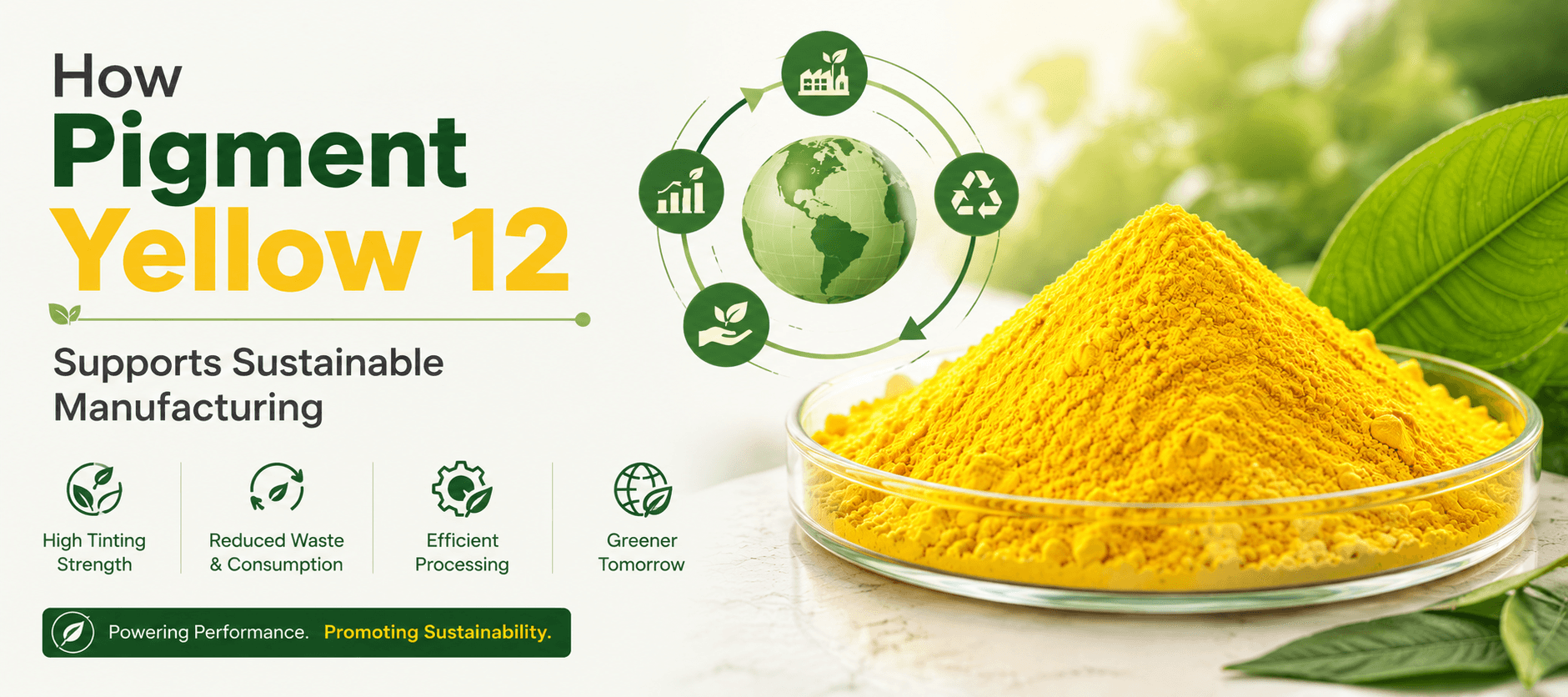
Sustainability has become a key priority across industries, from plastics and packaging to paints, coatings, inks, and textiles. Manufacturers are increasingly looking for high-performance pigments that deliver vibrant color, durability, and cost efficiency while supporting sustainable production goals. Among the most widely used organic pigments, Yellow 12 stands out for its excellent coloring strength, versatility, and long-lasting performance.
As a trusted Yellow 12 Manufacturer, Manali Pigments provides high-quality pigment solutions that help businesses achieve both product excellence and sustainability objectives.
What is Yellow 12?
Yellow 12 is an organic diarylide yellow pigment known for its bright yellow shade, high tinting strength, and excellent dispersion properties. It is commonly used in:
- Printing inks
- Plastic products
- Rubber compounds
- Paints and coatings
- Packaging materials
- Textile printing
Its versatility and performance make it a preferred choice for manufacturers seeking reliable color consistency across large-scale production processes.
While Yellow 12 is valued for its sustainability benefits, industries that require exceptional color strength and durability in printing applications often rely on Pigment Blue 15:0. Learn more about its role in the printing sector in our blog on Pigment Blue 15:0 in the Printing Ink Industry.
How Yellow 12 Supports Sustainable Manufacturing
As industries strive to reduce waste, improve resource efficiency, and lower their environmental impact, the choice of raw materials plays a crucial role. Yellow 12 has emerged as a preferred pigment for sustainable manufacturing due to its high color strength, excellent dispersion, and long-lasting performance. These properties help manufacturers optimize production processes while maintaining consistent product quality.
1. High Tinting Strength Reduces Pigment Consumption
One of the key sustainability benefits of Yellow 12 is its high tinting strength. Manufacturers can achieve the desired color intensity with lower pigment loading compared to lower-performance alternatives.
Benefits:
- Reduced raw material usage
- Lower production costs
- Less waste generation
- Improved resource efficiency
This helps companies optimize material consumption while maintaining product quality.
2. Excellent Dispersion Improves Manufacturing Efficiency
Yellow 12 disperses easily in various systems, including inks, plastics, and coatings. Better dispersion means manufacturers require less processing time and energy during production.
Sustainability Advantages:
- Lower energy consumption
- Faster production cycles
- Reduced machine wear
- Improved operational efficiency
For industries focused on reducing their carbon footprint, efficient processing plays a significant role in sustainable manufacturing practices.
3. Long-Lasting Color Performance
Products made with high-quality Yellow 12 retain their color and visual appeal for longer periods. Durable pigments reduce the need for frequent replacement or repainting.
Applications such as packaging, plastics, and industrial products benefit from:
- Extended product life
- Reduced maintenance requirements
- Lower material replacement rates
This contributes to waste reduction and supports circular economy initiatives.
Looking beyond yellow pigments? Discover why Pigment Violet 15 outperforms other violet pigments in terms of color strength, heat stability, and long-term durability in industrial applications.
4. Supports Sustainable Packaging Solutions
The packaging industry is rapidly moving toward recyclable and eco-friendly materials. Yellow 12 works effectively in packaging inks and plastic applications, providing bright and consistent coloration without compromising production efficiency.
Manufacturers can use Yellow 12 in:
- Flexible packaging
- Food packaging inks
- Consumer goods packaging
- Recyclable plastic products
Its compatibility with modern packaging systems makes it an important pigment for sustainable packaging development.
5. Reduced Production Waste
Color inconsistency often leads to rejected batches and material waste. High-quality pigments from reliable Yellow 12 Manufacturers provide consistent shade and performance, minimizing production errors.
Benefits include:
- Fewer rejected products
- Better batch-to-batch consistency
- Reduced manufacturing waste
- Improved quality control
These advantages directly support sustainability goals and operational efficiency.
6. Versatility Across Multiple Industries
Because Yellow 12 can be used in various applications, manufacturers can streamline inventory management and reduce the need for multiple colorant solutions.
Industries using Yellow 12 include:
- Printing and publishing
- Plastics manufacturing
- Automotive components
- Consumer goods
- Industrial coatings
This versatility helps businesses simplify procurement and reduce logistical complexities.
The performance of Yellow 12 also depends on effective pigment dispersion. Read our guide on How to Evaluate a Pigment Dispersion Supplier to understand the factors that impact color consistency, stability, and long-term product performance.
Choosing the Right Yellow 12 Manufacturer
Selecting a reliable Yellow 12 Manufacturer is essential for achieving consistent quality and sustainable production outcomes. When evaluating suppliers, consider:
- Product quality consistency
- Technical support capabilities
- Compliance with industry standards
- Strong supply chain reliability
- Custom pigment solutions
- Sustainable manufacturing practices
A trusted manufacturer can help businesses optimize performance while meeting environmental and operational objectives.
Just as Yellow 12 helps optimize manufacturing efficiency, choosing the right effect pigment can elevate product appearance. Read our guide on Pearlescent Pigment vs Metallic Pigment to compare their performance, visual effects, and industrial applications.
Yellow 12 and Yellow 13: Understanding the Difference
While Yellow 12 is widely used for its bright shade and versatility, some applications may require alternative pigments such as Yellow 13. Working with an experienced Yellow 13 Supplier ensures access to the right pigment solution based on specific color, performance, and application requirements.
Manufacturers often evaluate both pigments to determine the best fit for:
- Printing inks
- Plastic coloration
- Industrial coatings
- Packaging applications
Conclusion
Sustainable manufacturing requires materials that deliver both performance and efficiency. Yellow 12 supports these objectives through its high tinting strength, excellent dispersion, durability, and versatility across industries. By partnering with experienced Yellow 12 Manufacturers, businesses can reduce waste, optimize production processes, and create products that align with modern sustainability standards.
Whether for inks, plastics, coatings, or packaging applications, Yellow 12 remains a valuable pigment choice for manufacturers committed to long-term sustainability and product excellence.
FAQs
1. What is Yellow 12 used for?
Yellow 12 is widely used in printing inks, plastics, rubber, paints, coatings, and packaging applications due to its bright yellow shade and excellent tinting strength.
2. How does Yellow 12 support sustainable manufacturing?
Yellow 12 helps reduce pigment consumption, minimizes production waste, improves processing efficiency, and delivers long-lasting color performance, making manufacturing more sustainable.
3. Why is tinting strength important in pigments?
Higher tinting strength allows manufacturers to achieve the desired color using less pigment, reducing raw material usage and production costs.
4. How do I choose a reliable Yellow 12 Manufacturer?
Look for a manufacturer that offers consistent quality, technical support, reliable supply, industry compliance, and sustainable production practices.
5. What industries commonly use Yellow 12?
Industries such as printing, plastics, packaging, rubber, paints, and coatings commonly use Yellow 12 for its vibrant color and versatility.
6. What is the difference between Yellow 12 and Yellow 13?
While both are organic yellow pigments, they differ in shade, performance characteristics, and application suitability. A trusted Yellow 13 Supplier can help determine the best option for your specific needs.