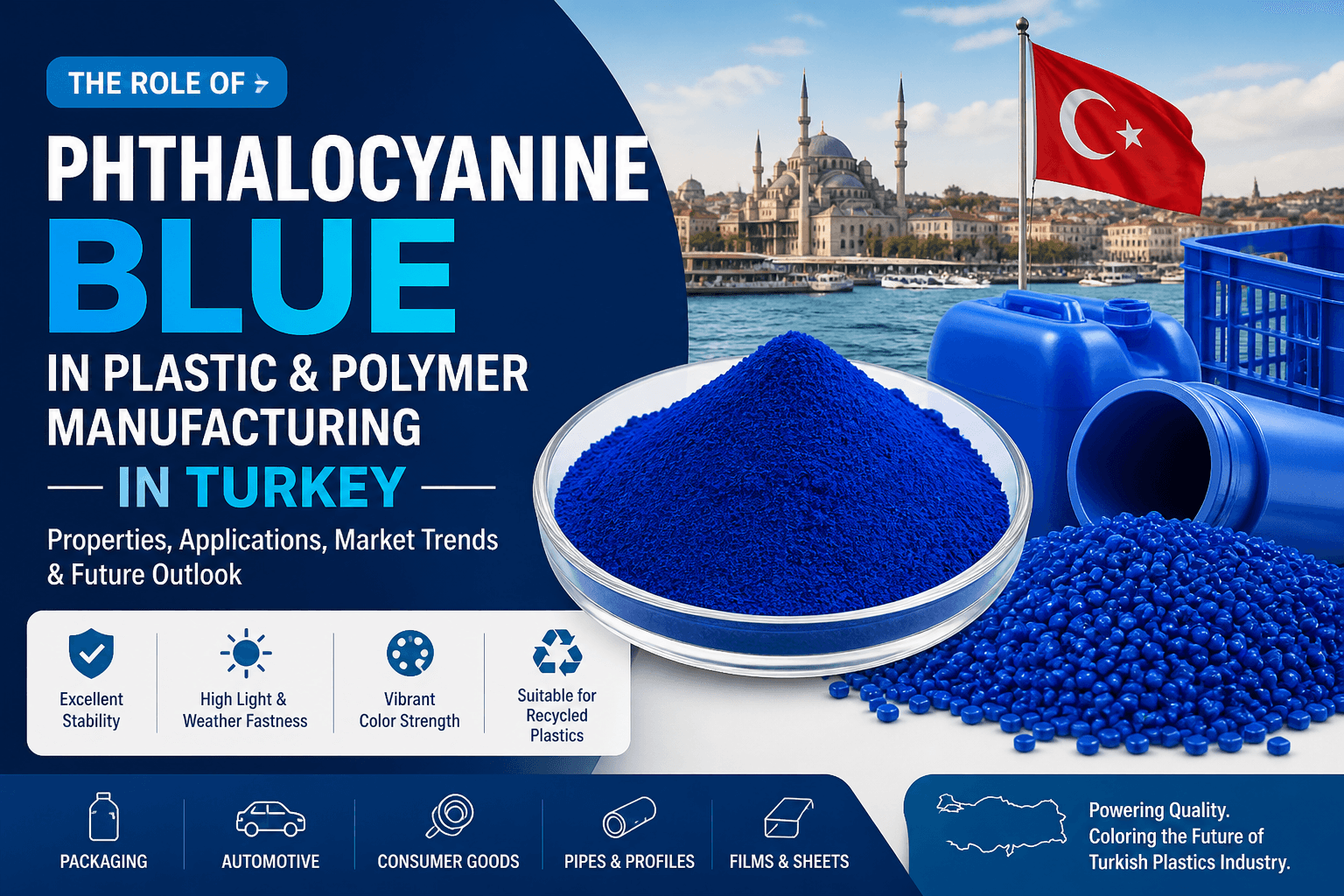
The demand for high-performance pigments in the plastics industry has grown significantly in Turkey, driven by expanding sectors such as packaging, automotive, construction, and consumer goods. Among the most widely used pigments is phthalocyanine blue, a highly stable and vibrant colorant derived from the broader class of phthalocyanine compounds. Known for their exceptional durability and color strength, phthalocyanine dyes play a crucial role in modern polymer manufacturing.
This blog explores how phthalocyanine blue contributes to plastic production in Turkey, its properties, applications, and why it remains a preferred pigment in industrial use.
Understanding Phthalocyanine Blue
Phthalocyanine blue, often referred to as copper phthalocyanine, is a synthetic organic pigment known for its intense blue shade and excellent chemical stability. It belongs to the family of phthalocyanine dyes, which are characterized by a large, stable molecular structure with strong light absorption properties.
These pigments are widely recognized for:
- High tinting strength
- Superior lightfastness
- Resistance to heat and chemicals
- Non-migratory behavior in polymers
Due to these properties, phthalocyanine blue has become one of the most widely used pigments in industrial applications, including plastics, coatings, and inks.
To understand how blue pigments perform across different global markets, you can also explore how ultramarine pigments are used in Brazil’s industrial sectors.
Importance of Pigments in Plastic Manufacturing
In polymer manufacturing, pigments are not just used for coloring. They also enhance the material’s functionality and performance. In Turkey’s rapidly growing plastic industry, pigments must meet strict standards for durability, environmental resistance, and consistency.

Key roles of pigments in plastics include:
- Providing aesthetic appeal
- Enhancing UV resistance
- Improving thermal stability
- Ensuring color consistency in mass production
This is where phthalocyanine dyes, especially phthalocyanine blue, stand out due to their ability to maintain color integrity under harsh processing conditions.
Along with selecting high-performance pigments like phthalocyanine blue, manufacturers should also focus on sourcing from dependable suppliers this guide on reliable solvent dyes suppliers explains how.
Why Phthalocyanine Blue is Ideal for Polymers
Phthalocyanine blue stands out as a highly reliable pigment in polymer manufacturing due to its excellent performance under demanding processing and environmental conditions.
1. Exceptional Thermal Stability
Plastic processing often involves high temperatures. Phthalocyanine blue can withstand temperatures above 300°C without degradation, making it suitable for thermoplastics like polyethylene, polypropylene, and PVC.
2. Strong Chemical Resistance
Turkey’s plastic products are often exposed to chemicals, oils, and environmental pollutants. Phthalocyanine pigments are resistant to acids, alkalis, and solvents, ensuring long-lasting color performance.
3. High Color Strength and Opacity
One of the defining colors of phthalocyanine is its intense blue tone. Even at low concentrations, it delivers deep coloration, reducing overall pigment usage and cost efficiency.
4. Non-Migratory Nature
In plastic applications, pigment migration can cause defects. Phthalocyanine blue remains stable within the polymer matrix, preventing bleeding or fading over time.
While phthalocyanine blue dominates polymer applications, it’s equally important to understand how ultramarine pigments are shaping emerging markets like Mexico.
Applications in Turkey’s Plastic Industry
Turkey is one of the leading plastic producers in Europe, exporting a wide range of polymer-based products. Phthalocyanine blue plays a vital role across multiple applications:
Packaging Industry
Plastic packaging, especially for food and beverages, requires stable and non-toxic pigments. Phthalocyanine dyes are widely used in:
- Bottles and containers
- Flexible packaging films
- Caps and closures
Automotive Components
The automotive sector in Turkey relies on durable plastics for interiors and exteriors. Phthalocyanine blue ensures:
- UV resistance
- Color durability under sunlight
- Resistance to environmental stress
Construction Materials
Plastic pipes, panels, and fittings require pigments that can withstand outdoor conditions. Phthalocyanine blue provides long-term color stability and weather resistance.
Consumer Goods
From household items to electronics, consistent color quality is essential. The vibrant colors of phthalocyanine help manufacturers achieve visually appealing products.
For manufacturers aiming at consistent shade and quality, understanding pigment dispersion is crucial, this article on pigment dispersions provides deeper insights into maintaining color consistency.
Environmental and Regulatory Advantages
Sustainability is becoming increasingly important in Turkey’s manufacturing sector. Phthalocyanine blue offers several environmental benefits:
- Low toxicity and minimal environmental impact
- High durability, reducing the need for frequent replacement
- Compatibility with recycling processes
Additionally, many phthalocyanine dyes comply with global safety standards, making them suitable for export-oriented industries.
While exploring high-performance pigments like phthalocyanine blue, it’s also useful to understand how azo pigments contribute to vibrant red, yellow, and orange shades across industries.
Market Trends in Turkey
The Turkish plastics industry is evolving with a focus on innovation and sustainability. Some key trends influencing the use of phthalocyanine blue include:
- Growing demand for high-performance pigments
- Increased use of recycled plastics
- Expansion of packaging and automotive sectors
- Adoption of eco-friendly colorants
As manufacturers seek reliable and cost-effective pigments, phthalocyanine compounds continue to dominate the market.
The country is also becoming a major hub for recycling, with over 1,135 recycling facilities and increasing investments in circular economy initiatives, further boosting demand for durable pigments like phthalocyanine dyes .
Challenges and Considerations
While phthalocyanine blue offers numerous advantages, manufacturers must consider:
- Proper dispersion in polymer matrices
- Compatibility with different plastic types
- Cost fluctuations due to raw material availability
Advanced processing techniques and high-quality pigment sourcing can help overcome these challenges.
As the demand for advanced pigments grows globally, it’s also worth exploring how pearlescent pigments are shaping premium and sustainable applications in markets like Canada.
Conclusion
In Turkey’s dynamic plastic and polymer industry, phthalocyanine blue plays a critical role in delivering high-quality, durable, and visually appealing products. Its superior stability, vibrant color, and cost-effectiveness make it an indispensable pigment across multiple applications.
As industries continue to evolve, the demand for reliable pigments like phthalocyanine will only increase, reinforcing their importance in modern manufacturing.
For premium-quality phthalocyanine dyes and pigments, companies like Manali Pigment are leading suppliers, offering solutions tailored to industrial needs and global standards.
FAQs
1. What is phthalocyanine blue used for in plastics?
Phthalocyanine blue is primarily used as a pigment to provide vibrant blue color in plastic products. It also enhances UV resistance, thermal stability, and durability in polymers used across packaging, automotive, and construction industries.
2. Why is phthalocyanine blue preferred in polymer manufacturing?
Phthalocyanine blue is preferred because of its high heat resistance, strong color intensity, chemical stability, and non-migratory nature. These properties ensure long-lasting color and performance in plastic materials.
3. What are phthalocyanine dyes?
Phthalocyanine dyes are a group of synthetic organic colorants known for their excellent lightfastness, chemical resistance, and intense coloration. They are widely used in plastics, coatings, inks, and textiles.
4. What are the common colors of phthalocyanine pigments?
The most common colors of phthalocyanine include blue and green. These pigments are known for their bright, rich tones and are widely used in industrial applications due to their stability and performance.
5. Is phthalocyanine blue safe for plastic applications?
Yes, phthalocyanine blue is considered safe for most plastic applications. It has low toxicity and complies with many international safety standards, making it suitable for packaging and consumer goods.
6. Which industries in Turkey use phthalocyanine blue the most?
In Turkey, phthalocyanine blue is widely used in industries such as packaging, automotive, construction, and consumer goods manufacturing due to its durability and color consistency.
7. Can phthalocyanine blue be used in recycled plastics?
Yes, phthalocyanine blue works well in recycled plastics. Its strong color strength and stability help maintain consistent color even when used in recycled polymer materials.
8. How does phthalocyanine improve plastic durability?
Phthalocyanine pigments enhance plastic durability by improving resistance to UV radiation, heat, and chemicals, which helps extend the lifespan of plastic products.
9. Does phthalocyanine blue fade over time?
No, phthalocyanine blue has excellent lightfastness and does not fade easily, even when exposed to sunlight or harsh environmental conditions.
10. Where can manufacturers source high-quality phthalocyanine dyes?
Manufacturers can source high-quality phthalocyanine dyes from trusted suppliers like Manali Pigment, known for delivering consistent and industry-grade pigment solutions.