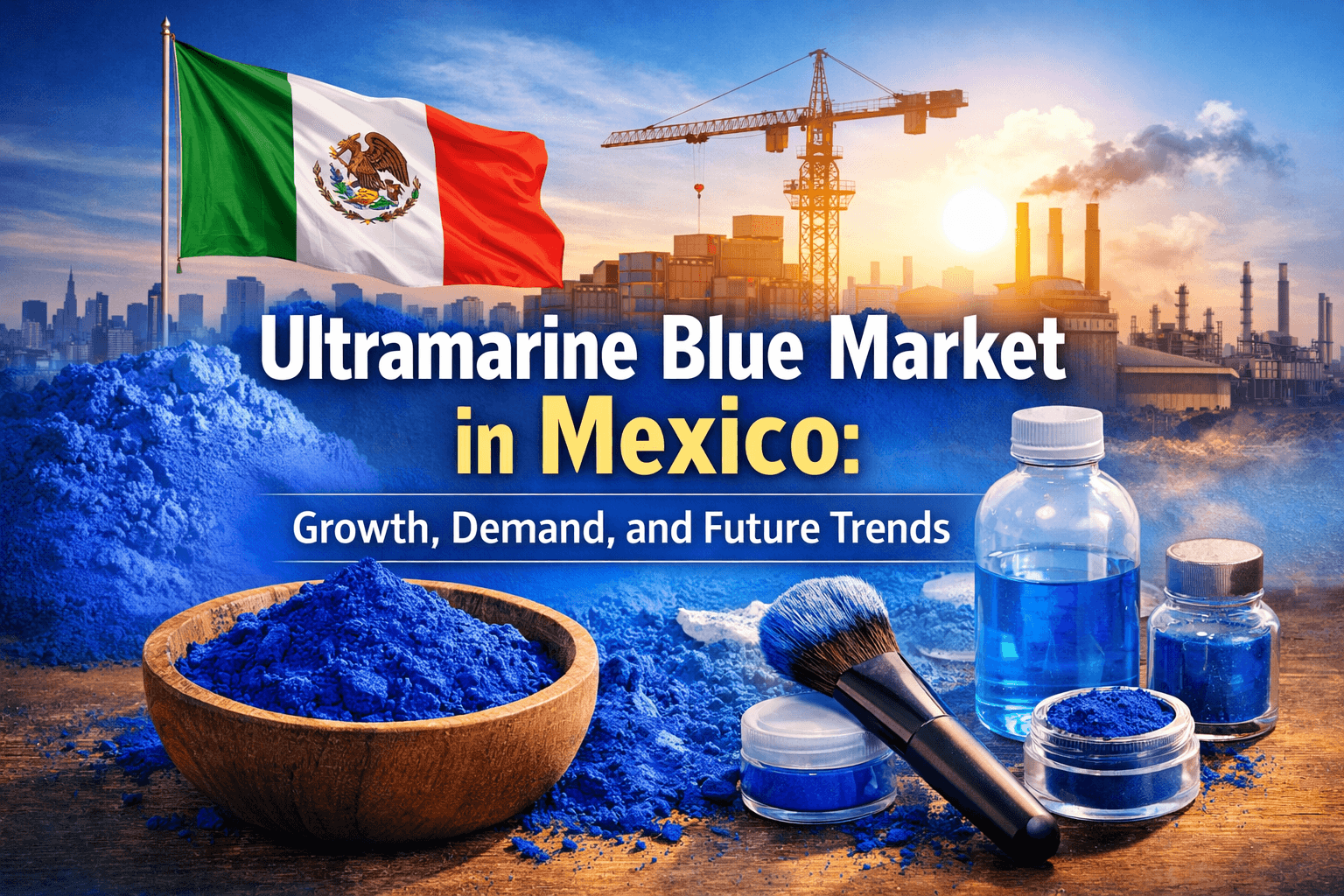
The ultramarine blue market in Mexico is gaining steady momentum, driven by rising industrial demand, expanding construction activities, and increasing use in consumer goods. As a widely used inorganic pigment, ultramarine blue plays a crucial role in industries such as paints, plastics, detergents, and cosmetics.
In this blog, we will explore what is ultramarine blue, its applications, market demand in Mexico, key growth drivers, and future trends shaping the industry.
What is Ultramarine Blue?
Ultramarine blue is a vibrant inorganic pigment originally derived from the semi-precious stone lapis lazuli but now primarily produced synthetically. It is known for its:
- Bright blue color
- High heat stability
- Resistance to light and chemicals
- Non-toxic and eco-friendly nature
Because of these properties, ultramarine blue pigment is widely used across industrial and consumer applications.
Ultramarine Blue Color and Its Industrial Importance
The ultramarine blue color is not just visually appealing but also functional. It is commonly used as:
- A whitening agent in detergents
- A colorant in plastics and coatings
- A tinting pigment in paints and inks
- A cosmetic ingredient for safe coloring
Its ability to counteract yellow tones makes it especially valuable in cleaning and textile industries.
Market Overview: Ultramarine Blue in Mexico
Mexico is emerging as an important market for ultramarine pigments due to its growing industrial base and import demand.
- Mexico is among the top global importers of ultramarine blue pigments, contributing around 10–11% of global imports.
- The global pigments market is expanding steadily, with projections showing growth from USD 42.82 billion in 2025 to USD 53.41 billion by 2033, at a CAGR of around 2.8%.
- Increasing demand from construction, plastics, and coatings sectors is fueling pigment consumption
This makes Mexico a strategic market for exporters and manufacturers looking to expand in Latin America.
Key Growth Drivers of the Ultramarine Blue Market in Mexico

1. Rising Construction and Infrastructure Development
Mexico’s growing urbanization and infrastructure projects are boosting demand for paints and coatings.
- Ultramarine pigments are widely used in architectural paints and decorative coatings
- Global data shows construction growth significantly drives pigment demand
As construction activities expand, the need for durable and visually appealing materials continues to rise.
2. Expansion of Plastics and Packaging Industry
The plastics sector in Mexico is rapidly expanding due to manufacturing and export activities.
- Ultramarine blue is used for color stability and aesthetic appeal in plastics
- It helps maintain color consistency under high temperatures
This growing industrial base is directly increasing the demand for high-performance pigments.
3. Growing Detergent and Textile Industry
One of the largest applications of ultramarine blue is in detergents.
- Used as a blueing agent to enhance fabric whiteness
- High demand from household and industrial cleaning products
As consumer demand for better cleaning products rises, pigment usage in this sector continues to grow.
4. Increasing Demand for Eco-Friendly Pigments
Environmental regulations are pushing industries toward safer alternatives.
- Ultramarine blue is non-toxic and environmentally friendly
- Preferred over heavy metal-based pigments
This shift is significantly boosting its adoption across industries.
5. Growth in Cosmetics and Personal Care
The cosmetic industry in Mexico is expanding, increasing demand for safe pigments.
- Used in makeup products and personal care formulations
- Offers vibrant color with low toxicity
With rising consumer awareness, demand for safe and skin-friendly ingredients is expected to increase further.
Market Size and Global Context
While focusing on Mexico, it is important to understand the global perspective:
- The global ultramarine pigments market is expected to grow at a CAGR of around 4.7% from 2025 to 2032
- Ultramarine blue holds around 80% share of the pigment segment
- The ultramarine blue pigment market is projected to reach USD 345 million by 2033
This steady growth reflects increasing global and regional demand, including Mexico.
Challenges in the Mexican Market
Despite strong growth, the market faces certain challenges:
- Dependence on imports for raw materials and pigments
- Price fluctuations due to global supply chain disruptions
- Competition from alternative pigments
- Regulatory compliance for industrial use
However, these challenges also create opportunities for local manufacturing and partnerships.
The global pigment industry is rapidly evolving with advanced solutions like pearlescent pigments playing a key role. Explore their growing demand in Canada.
Future Trends in Ultramarine Blue Market in Mexico

1. Shift Toward Sustainable Pigments
Eco-friendly and non-toxic pigments will dominate the market.
2. Growth in Automotive Coatings
As Mexico is a major automotive manufacturing hub, demand for coatings will increase.
3. Technological Advancements
Improved pigment quality with better:
- Heat resistance
- Color consistency
- UV stability
4. Rising Demand in Export-Oriented Manufacturing
Mexico’s role as a manufacturing hub for North America will boost pigment demand in:
- Plastics
- Packaging
- Industrial coatings
5. Increased Investment Opportunities
With rising demand, the market offers opportunities for:
- Importers
- Distributors
- Local pigment production units
Conclusion
The ultramarine blue market in Mexico is on a steady growth path, supported by expanding industrial sectors and increasing demand for sustainable pigments. From construction and plastics to detergents and cosmetics, ultramarine blue continues to play a vital role across industries. Companies like Manali Pigments are contributing to this growth by offering high-quality ultramarine blue pigments that meet global industry standards and evolving market needs.
With Mexico being a key importer and Latin America showing consistent growth, the market presents strong opportunities for businesses, exporters, and investors. Future trends indicate a shift toward eco-friendly solutions, advanced pigment technologies, and increased industrial applications.
FAQs
1. What is ultramarine blue?
Ultramarine blue is a synthetic inorganic pigment known for its bright blue color and high stability. It is widely used in paints, plastics, detergents, and cosmetics.
2. What is ultramarine blue pigment used for?
Ultramarine blue pigment is used as a colorant in paints, coatings, plastics, and inks. It is also used in detergents as a whitening agent to reduce yellow tones.
3. Why is ultramarine blue color used in detergents?
Ultramarine blue helps neutralize yellowish tones in fabrics, making them appear whiter. This process is known as optical brightening or blueing.
4. Is ultramarine blue safe for use?
Yes, ultramarine blue is non-toxic and considered safe for industrial and cosmetic applications. It is often preferred over heavy metal-based pigments.
5. Why is the demand for ultramarine blue increasing in Mexico?
The demand is rising due to growth in construction, plastics, and detergent industries. Increased preference for eco-friendly pigments is also boosting its use.
6. Which industries use ultramarine blue the most?
Major industries include paints and coatings, plastics, detergents, textiles, and cosmetics. These sectors rely on it for color stability and brightness.
7. Is Mexico a major market for ultramarine blue?
Yes, Mexico is one of the key importers of ultramarine blue pigments globally. Its expanding manufacturing and industrial sectors drive consistent demand.
8. What are the future trends of ultramarine blue in Mexico?
The market is expected to grow with rising demand for sustainable and non-toxic pigments. Technological advancements and industrial expansion will further boost usage.