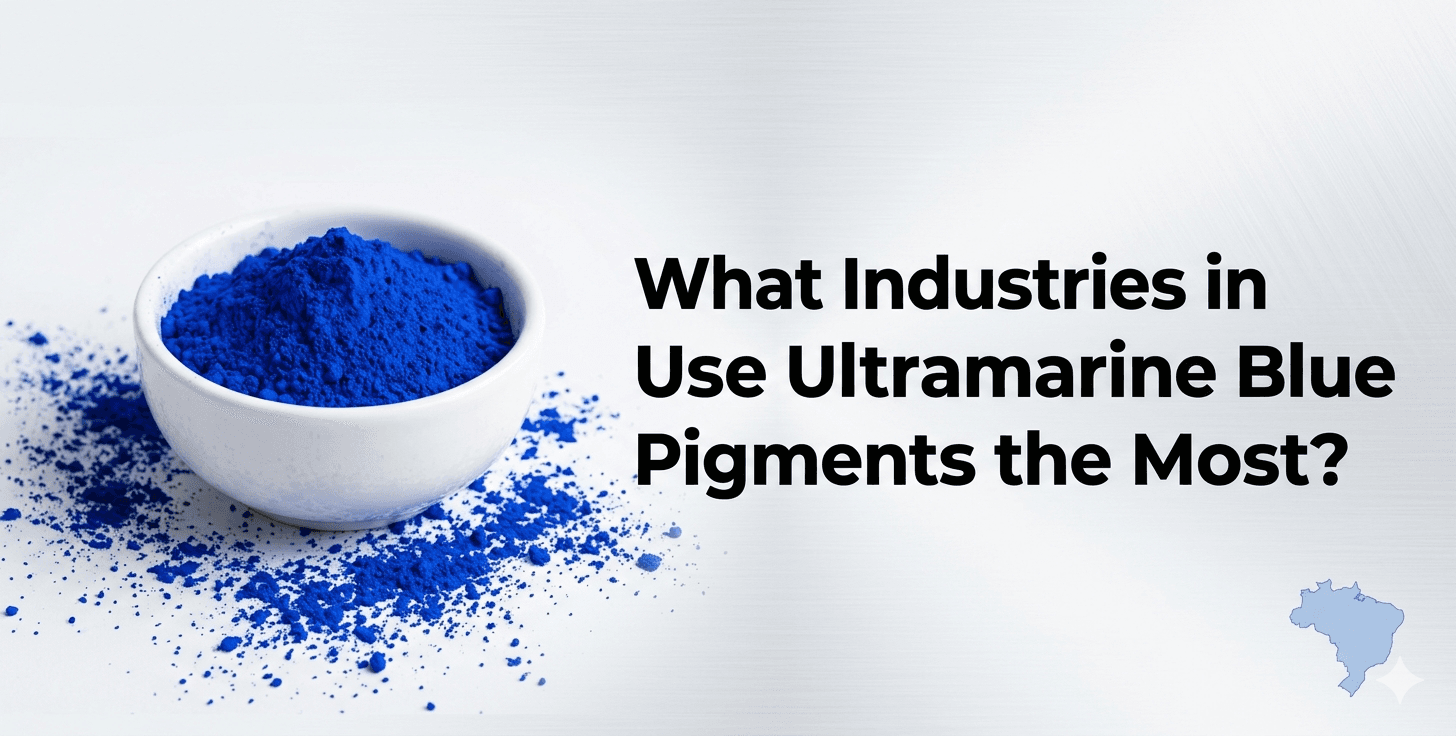
Brazil has one of the largest manufacturing sectors in Latin America, with industries ranging from plastics and packaging to construction materials and printing. In many of these sectors, ultramarine blue pigments play an important role in achieving vibrant colors, improving product appearance, and maintaining long-lasting color stability.
Because of their excellent heat stability, chemical resistance, and cost efficiency, ultramarine pigments are widely used across Brazilian manufacturing industries.
What Is Ultramarine Blue Pigment?

Ultramarine blue is a synthetic inorganic pigment widely used in industrial applications to produce bright blue shades. It is known for its excellent color strength and durability, making it a popular pigment for plastics, coatings, rubber, and inks.
Originally derived from the mineral lapis lazuli, modern ultramarine blue pigments are produced synthetically to ensure consistent quality and affordability for large-scale manufacturing.
What Is Ultramarine Blue Used For?
Ultramarine blue pigments are commonly used for:
- Plastics and polymer products
- Printing inks
- Decorative and industrial paints
- Rubber products
- Powder coatings
- Textile applications
- Construction materials
In Brazil, these pigments are especially important in packaging, automotive plastics, and consumer goods manufacturing.
What Is Ultramarine Blue Pigment Made Of?
Many manufacturers ask: What is ultramarine blue pigment made of?
Ultramarine blue pigments are typically produced using a combination of:
- Kaolin clay
- Sodium carbonate
- Sulfur
- Silica
- Alumina
These raw materials are heated at high temperatures in controlled furnaces to form the pigment’s characteristic deep blue crystalline structure.
This manufacturing process ensures the pigment provides excellent stability and consistent color performance across industrial applications.
What Are the Properties of Ultramarine Blue Pigment?

Understanding the properties of ultramarine blue pigment helps manufacturers choose the right grade for their products.
Key properties include:
1. High tinting strength - Produces strong and vibrant blue shades even at low concentrations.
2. Excellent heat resistance - Suitable for plastic processing at elevated temperatures.
3. Chemical stability - Resistant to alkalis and many industrial chemicals.
4. Good dispersion - Mixes easily into plastics, coatings, and inks.
5. Lightfastness - Maintains color integrity when exposed to light.
Because of these properties, ultramarine blue pigments are widely used in Brazil’s industrial manufacturing sector.
Major Industries in Brazil Using Ultramarine Blue Pigments
Ultramarine blue pigments are widely used across several manufacturing sectors in Brazil due to their color stability, cost efficiency, and versatility in industrial formulations. Below are the key industries where ultramarine blue pigment plays an important role.

1. Plastics and Masterbatch Industry
Brazil has a large plastics manufacturing sector producing:
- Household products
- Packaging materials
- Automotive components
- Consumer goods
Ultramarine blue pigments are widely used to:
- Produce bright blue plastic products
- Neutralize yellowish tones in white plastics
- Improve visual brightness
Manufacturers often ask: Which ultramarine blue pigment grade is best for plastics?
For plastic processing, the ideal pigment should offer:
- High heat resistance
- Excellent dispersion
- Strong tinting strength
- Compatibility with polymer resins
High-quality ultramarine blue pigments are commonly used in polyethylene (PE), polypropylene (PP), and PVC applications.
2. Paints and Coatings Industry
Brazil's construction and infrastructure sectors create strong demand for decorative and industrial paints.
Ultramarine blue pigments are widely used in:
- Architectural paints
- Industrial coatings
- Decorative finishes
- Cement-based coatings
The pigment provides stable color performance and weather resistance, making it ideal for outdoor coatings.
3. Printing Inks and Packaging
Brazil is one of the largest packaging markets in Latin America.
Ultramarine blue pigments are used in:
- Flexographic inks
- Offset printing inks
- Packaging graphics
- Labels and branding materials
These pigments provide consistent color reproduction and excellent dispersion in ink systems.
4. Rubber Manufacturing
The rubber industry in Brazil uses pigments in products such as:
- Industrial rubber goods
- Automotive rubber parts
- Footwear components
Ultramarine blue pigments help manufacturers create colored rubber products while maintaining heat stability during processing.
5. Powder Coatings Industry
Powder coatings are increasingly popular in Brazil because they offer durability and environmental benefits.
Ultramarine pigments are used in powder coatings for:
- Metal furniture
- Appliances
- Automotive components
- Industrial equipment
Their excellent thermal stability makes them suitable for high-temperature curing processes.
How to Make Ultramarine Blue Color in Industrial Applications
Manufacturers often ask how to make ultramarine blue color for their products.
In industrial applications, the color is achieved by adding ultramarine blue pigment to the base material, such as plastic resin, paint binder, or ink formulation.
The pigment disperses into the material to create:
- Bright blue shades
- Ultramarine blue green shade variations
- Custom color formulations
Color strength can be adjusted by modifying the pigment concentration.
Why Brazilian Manufacturers Prefer Ultramarine Blue Pigments
Industries across Brazil prefer ultramarine blue pigments because they offer:
- Cost-effective coloring solutions
- Strong color intensity
- Compatibility with multiple materials
- Reliable industrial performance
- Excellent heat resistance
These benefits make ultramarine pigments ideal for large-scale production environments.
Partnering with a Reliable Pigment Manufacturer
For manufacturers in Brazil, selecting a reliable pigment supplier is essential to ensure consistent product quality and stable color performance.
Manali Pigments Private Limited is a trusted pigment manufacturer with more than 36 years of industry experience.
About Manali Pigments
Established in Lucknow, Uttar Pradesh, Manali Pigments is a professionally managed pigment manufacturing company known for delivering high-quality pigments to global markets.
Conclusion
Ultramarine blue pigments play a vital role in several industries across Brazil, including plastics, paints, printing inks, rubber manufacturing, and powder coatings.
Their excellent heat resistance, strong tinting strength, and cost efficiency make them an ideal pigment for large-scale manufacturing.
For Brazilian manufacturers seeking consistent quality and reliable supply, partnering with an experienced pigment manufacturer like Manali Pigments ensures dependable color performance and long-term production stability.
FAQs
1. What is ultramarine blue pigment used for?
Ultramarine blue pigment is widely used in plastics, paints, printing inks, rubber, and coatings. It provides bright blue shades and helps improve color brightness in many industrial products.
2. What is ultramarine blue pigment made of?
Ultramarine blue pigment is typically made from kaolin clay, sodium carbonate, sulfur, silica, and alumina. These materials are processed at high temperatures to create the stable blue pigment structure.
3. Which industries use ultramarine blue pigments the most in Brazil?
In Brazil, ultramarine blue pigments are mainly used in plastics, paints & coatings, printing inks, rubber manufacturing, and powder coatings. These industries rely on the pigment for durable and vibrant color production.
4. What are the properties of ultramarine blue pigment?
Ultramarine blue pigments offer high tinting strength, heat stability, good dispersion, and excellent lightfastness. These properties make them suitable for demanding industrial applications.
5. Which ultramarine blue pigment grade is best for plastics?
For plastics, the best ultramarine blue pigment grades provide high heat resistance and excellent dispersion. They work well in polymers like polypropylene (PP), polyethylene (PE), and PVC.
6. How to make ultramarine blue color in industrial products?
Ultramarine blue color is created by mixing ultramarine blue pigment with the base material like plastic resin, paint, or ink. The pigment concentration is adjusted to achieve the desired shade.
7. What is ultramarine blue green shade?
Ultramarine blue green shade refers to a slightly greenish tone of ultramarine blue pigment. It is used in applications where cooler blue tones are required.
8. Why do manufacturers prefer ultramarine blue pigments?
Manufacturers prefer ultramarine blue pigments because they are cost-effective and offer strong color performance. They also provide good heat stability and long-lasting color durability.