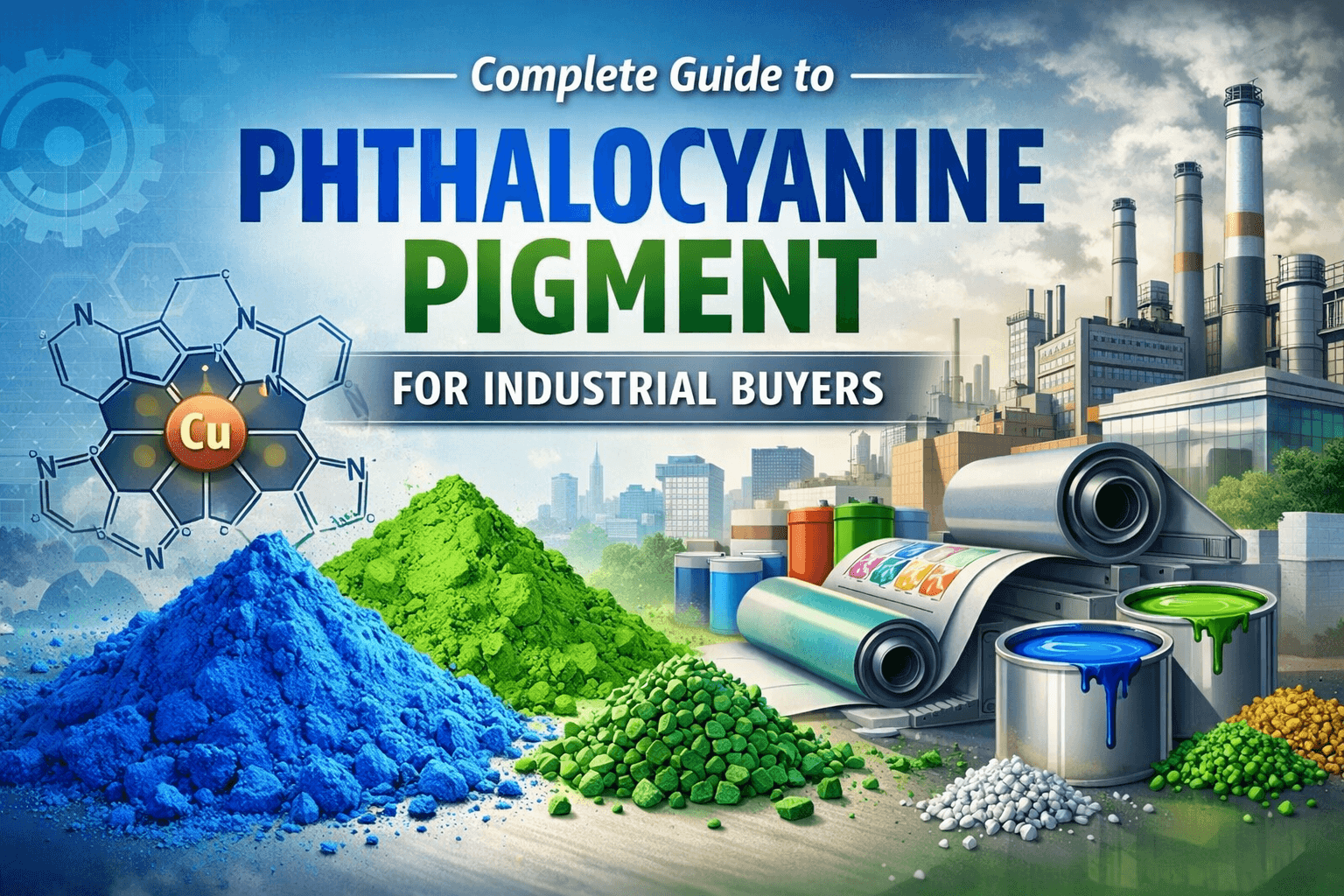
Phthalocyanine pigments are among the most widely used and trusted colorants in industrial applications. Known for their exceptional color strength, durability, and chemical stability, these pigments have become a go-to choice for industries ranging from plastics and coatings to inks and textiles.
If you are an industrial buyer looking to understand phthalocyanine pigment, this guide will help you explore its types, properties, applications, and market insights so you can make informed purchasing decisions.
What is Phthalocyanine Pigment?

Phthalocyanine pigment is a synthetic organic pigment derived from phthalocyanine compounds. These pigments are primarily known for producing vibrant blue and green shades with outstanding performance characteristics.
The most common variants include:
- Phthalocyanine blue pigment (PB15)
- Phthalocyanine green pigment (PG7, PG36)
These pigments are widely preferred due to their high tinting strength, lightfastness, and resistance to heat and chemicals.
In contrast to organic pigments like phthalocyanines, inorganic pigments such as green chrome oxide are widely used for their superior stability and resistance to harsh industrial conditions.
Types of Phthalocyanine Pigments
Phthalocyanine pigments are broadly categorized based on their color variations and chemical modifications. Among them, blue variants are the most widely used due to their versatility and performance across industries.

1. Phthalocyanine Blue Pigment
Phthalocyanine blue pigment is one of the most widely used pigments in industrial applications.
Key Features:
These features make phthalocyanine blue a preferred choice for industries requiring long-lasting and vibrant color performance.
- Bright and intense blue shade
- Excellent lightfastness and weather resistance
- High tinting strength
- Cost-effective compared to other blue pigments
Applications:
Due to its versatility and stability, this pigment is widely used across multiple industrial applications.
- Printing inks
- Paints and coatings
- Plastics and polymers
- Textile printing
This pigment is often referred to as copper phthalocyanine pigment, as copper is used as the central metal atom in its chemical structure.
2. Phthalocyanine Green Pigment
Phthalocyanine green pigment is produced by halogenating phthalocyanine blue, resulting in a vivid green shade.
Key Features:
Phthalocyanine green pigment is produced by halogenating phthalocyanine blue, resulting in a vivid green shade.
- Strong, bright green color
- Superior chemical resistance
- Excellent opacity and dispersion
- High durability in outdoor applications
Applications:
Its robust performance makes it suitable for both industrial and decorative uses.
- Automotive coatings
- Industrial paints
- Plastic coloring
- Decorative finishes
To better understand the real-world applications of phthalocyanine pigments, Pigment Green 7 serves as a great example, widely used across major industries due to its durability and color stability.
What is Copper Phthalocyanine Pigment?
Copper phthalocyanine pigment is the base compound used to produce both blue and green phthalocyanine pigments. It is one of the most stable organic pigments available.
Why it matters for industrial buyers:
- High thermal stability makes it ideal for plastic processing
- Excellent resistance to solvents and chemicals
- Consistent color performance across batches
This makes it a reliable choice for industries where consistency and durability are critical.
While phthalocyanine pigments dominate in color strength, the future of the pigment industry is also being driven by pearlescent pigments, known for their shimmering, multi-dimensional effects.
Key Properties of Phthalocyanine Pigments
Understanding the core properties of pigment phthalocyanine helps buyers choose the right grade for their application.
1. High Color Strength
Phthalocyanine pigments offer intense coloration even in small quantities, reducing overall pigment consumption.
2. Excellent Lightfastness
They resist fading even under prolonged exposure to sunlight, making them ideal for outdoor applications.
3. Chemical and Heat Resistance
These pigments perform well under harsh industrial conditions, including high temperatures and exposure to chemicals.
4. Good Dispersion
Phthalocyanine pigments disperse easily in various media, ensuring uniform color distribution.
5. Cost Efficiency
Compared to inorganic pigments, they provide better color strength at a lower dosage, reducing production costs.
Phthalocyanine Pigment Market Overview
The phthalocyanine pigment market is experiencing steady growth globally due to increasing demand from construction, automotive, and packaging industries.
Key Market Trends:
- Rising demand for eco-friendly pigments
- Growth in the packaging and plastics industry
- Increasing use in high-performance coatings
- Expansion in emerging economies like India and Southeast Asia
India has become a major manufacturing hub for phthalocyanine pigments, offering competitive pricing and high-quality production.
Factors to Consider Before Buying
As an industrial buyer, selecting the right phthalocyanine pigment requires careful evaluation.
1. Application Compatibility
Ensure the pigment is suitable for your specific application such as plastics, coatings, or inks.
2. Heat Stability
For plastic processing, choose pigments with high thermal resistance.
3. Dispersion Quality
Good dispersion ensures uniform color and better finish.
4. Regulatory Compliance
Check for environmental and safety compliance, especially for export markets.
5. Supplier Reliability
Consistent quality, timely delivery, and technical support are crucial factors.
Not all pigments are about color brightness, carbon black proves its value through strength, stability, and performance, making it a key component in industrial formulations alongside phthalocyanine pigments.
Advantages Over Other Pigments
Compared to other organic and inorganic pigments, phthalocyanine pigments offer:
- Better color intensity
- Higher durability
- Superior weather resistance
- Lower cost per unit color strength
These advantages make them a preferred choice for industrial-scale applications.
Why Phthalocyanine Pigments are a Smart Investment
For industrial buyers, phthalocyanine pigments are not just about color, they are about performance, efficiency, and long-term value.
Their ability to deliver consistent results across multiple applications makes them a dependable solution for manufacturers looking to maintain product quality while optimizing costs.
Conclusion
Phthalocyanine pigments, including phthalocyanine blue pigment, phthalocyanine green pigment, and copper phthalocyanine pigment, play a vital role in modern industrial applications. Their superior properties, wide usability, and cost-effectiveness make them a top choice for industries worldwide.
As the phthalocyanine pigment market continues to grow, choosing the right supplier becomes equally important as selecting the right pigment.
For high-quality and reliable pigment solutions, industrial buyers can consider Manali Pigments, known for delivering consistent quality, advanced manufacturing standards, and a strong commitment to customer satisfaction.
FAQs
1. What is phthalocyanine pigment used for?
Phthalocyanine pigment is widely used in industries such as paints and coatings, plastics, printing inks, textiles, and rubber. Its high color strength and durability make it ideal for both indoor and outdoor applications.
2. What is the difference between phthalocyanine blue pigment and phthalocyanine green pigment?
Phthalocyanine blue pigment provides a strong, vibrant blue shade, while phthalocyanine green pigment is derived from the blue variant through halogenation, resulting in a bright green color with enhanced chemical resistance.
3. Why is copper phthalocyanine pigment important?
Copper phthalocyanine pigment forms the base structure for both blue and green pigments. It offers excellent thermal stability, chemical resistance, and consistent color performance, making it highly reliable for industrial use.
4. Is phthalocyanine pigment suitable for outdoor applications?
Yes, phthalocyanine pigments have excellent lightfastness and weather resistance, making them suitable for outdoor coatings, automotive paints, and construction materials.
5. How do phthalocyanine pigments perform in high-temperature applications?
These pigments have high heat stability, which makes them suitable for plastic processing and other high-temperature industrial applications without losing color quality.
6. Are phthalocyanine pigments environmentally friendly?
Modern phthalocyanine pigments are considered relatively safe and eco-friendly compared to heavy metal-based pigments, especially when sourced from reputable manufacturers following compliance standards.
7. What factors should industrial buyers consider before purchasing?
Buyers should evaluate application compatibility, dispersion quality, heat stability, regulatory compliance, and supplier reliability before selecting a phthalocyanine pigment.
8. How does the phthalocyanine pigment market look globally?
The phthalocyanine pigment market is growing steadily due to rising demand in industries like construction, packaging, and automotive, especially in developing regions like Asia-Pacific.
9. Can phthalocyanine pigments be customized for specific applications?
Yes, many manufacturers offer customized grades based on particle size, surface treatment, and dispersion requirements to suit different industrial applications.
10. Why are phthalocyanine pigments cost-effective?
They provide high tinting strength, meaning less pigment is needed to achieve the desired color, which reduces overall production costs while maintaining performance.