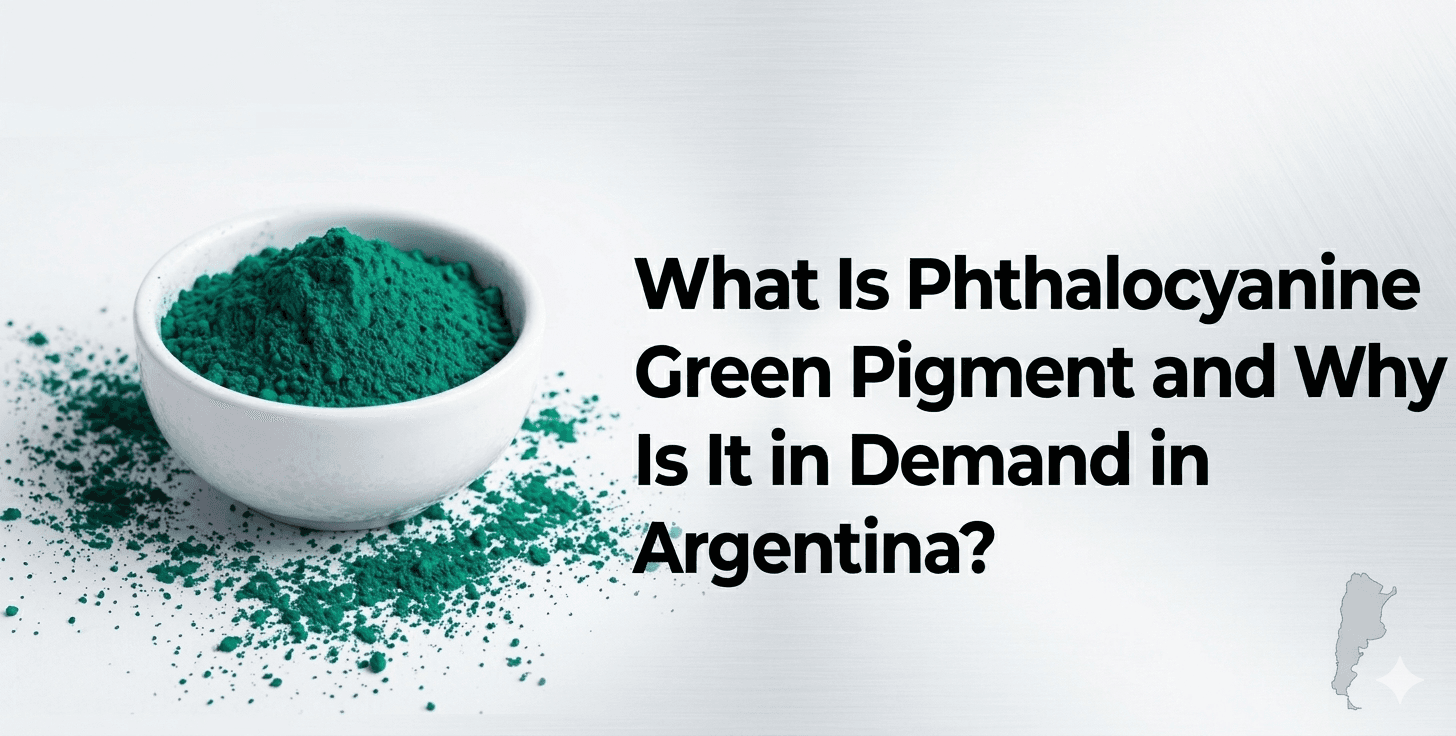
Color pigments play a crucial role in many manufacturing industries, from paints and coatings to plastics and printing inks. Among these pigments, phthalocyanine green has become one of the most widely used industrial colorants due to its durability, vibrant shade, and excellent stability.
As industries in Argentina continue to grow in sectors like packaging, automotive coatings, plastics, and textiles, the demand for high-performance pigments such as phthalocyanine green pigment is steadily increasing.
In this article, we explore what phthalocyanine green pigment is, why it is widely used, and which industries in Argentina rely on it.
What Is Phthalocyanine Green Pigment?

Phthalocyanine green is a synthetic organic pigment known for its intense green shade, high tinting strength, and outstanding resistance to chemicals and light.
It is typically produced from phthalocyanine green & copper compounds, where copper acts as the central metal component that stabilizes the pigment structure. This chemical structure gives the pigment exceptional performance in demanding industrial applications.
Key Characteristics of Phthalocyanine Green
- Bright and intense green color
- Excellent lightfastness and weather resistance
- High chemical and heat stability
- Strong tinting strength
- Good compatibility with various polymers and resins
Because of these properties, phthalocyanine green pigment is widely used across multiple industries that require durable and consistent color performance.
Why Is Phthalocyanine Green Pigment So Widely Used?
Manufacturers around the world prefer phthalocyanine green because it offers a combination of performance, stability, and cost efficiency.

Here are some of the key reasons why it is so popular:
1. Exceptional Color Strength
Phthalocyanine green provides a deep and vibrant green shade, making it ideal for products that require strong and long-lasting color.
2. Outstanding Weather Resistance
The pigment performs well in outdoor conditions, maintaining its color even when exposed to sunlight, heat, and harsh weather.
3. High Chemical Stability
Industries such as coatings and plastics require pigments that can withstand chemicals and solvents. Phthalocyanine green offers excellent resistance, ensuring durability.
4. Cost-Effective Performance
Compared to many other pigments, phthalocyanine green delivers high performance at an economical cost, making it attractive for large-scale manufacturing.
These advantages explain why phthalocyanine green pigment is so widely used across global industries.
What Industries Use Phthalocyanine Green Pigment?
Several major industries rely on phthalocyanine green pigment for color consistency and durability.
Paints and Coatings Industry
The paints and coatings sector uses phthalocyanine green for:
- Decorative paints
- Industrial coatings
- Automotive finishes
- Protective coatings
The pigment provides excellent UV resistance and color retention, which is crucial for long-lasting finishes.
Printing Ink Industry
Printing inks require pigments that provide sharp color quality and strong dispersion.
Phthalocyanine green is commonly used in:
- Packaging inks
- Publication printing
- Flexographic printing
- Gravure inks
Argentina’s growing packaging sector increases the demand for such reliable pigments.
Plastics and Masterbatch
The plastics industry uses phthalocyanine green in products such as:
- Plastic containers
- Packaging materials
- Household goods
- Consumer products
Its heat stability and strong color intensity make it ideal for plastic processing.
Rubber Manufacturing
Rubber products often require pigments that maintain color despite mechanical stress.
Phthalocyanine green is used in:
- Rubber components
- Industrial rubber goods
- Automotive rubber products
Powder Coatings
Powder coating manufacturers prefer phthalocyanine green because it performs well under high curing temperatures and harsh environments.
Can Phthalocyanine Green Pigment Be Used in Textiles?
Yes, phthalocyanine green pigment can be used in textiles, especially in pigment printing applications.
In textile manufacturing, it is used for:
- Fabric printing
- Textile coatings
- Decorative textile designs
- Industrial fabrics
The pigment offers excellent wash resistance, color stability, and brightness, making it suitable for textile printing processes.
As Argentina’s textile and fashion industries expand, pigments like phthalocyanine green are becoming increasingly important.
Why Argentina’s Industries Are Increasing Demand for Phthalocyanine Green
Argentina has several growing industrial sectors that rely heavily on pigments.
Key factors driving demand include:
- Expansion of the automotive coatings industry
- Growth of plastic packaging manufacturing
- Rising demand for industrial and decorative paints
- Increased use of printing inks for packaging
- Development of textile and rubber manufacturing
These sectors require pigments that offer durability, vibrant color, and reliable performance, which makes phthalocyanine green pigment a preferred choice.
Why Choose Manali Pigments for Industrial Pigments?
Manali Pigments Private Limited is a leading pigment manufacturing company based in Lucknow, India, with over 36 years of industry expertise. The company supplies high-quality pigments to 1000+ clients across 15+ countries, serving industries such as paints, coatings, printing inks, plastics, and rubber.
Known for consistent quality, technical expertise, and reliable supply, Manali Pigments has become a trusted partner for global manufacturers seeking durable and high-performance pigment solutions.
Conclusion
Phthalocyanine green pigment has become a vital component in modern manufacturing due to its strong color intensity, chemical stability, and excellent durability.
Industries in Argentina such as paints, plastics, printing inks, rubber, coatings, and textiles increasingly depend on this high-performance pigment for consistent and long-lasting color solutions.
With decades of experience and a commitment to quality, Manali Pigments continues to support global industries by providing reliable pigment solutions that meet the evolving needs of modern manufacturing.
FAQs
1. What is phthalocyanine green pigment?
Phthalocyanine green pigment is a synthetic organic pigment known for its bright green color, excellent lightfastness, and chemical stability. It is widely used in industrial applications such as paints, coatings, plastics, and printing inks.
2. Why is phthalocyanine green pigment so widely used?
Phthalocyanine green pigment is popular because of its strong color strength, durability, and resistance to heat, chemicals, and UV light. These properties make it ideal for industries that require long-lasting and vibrant colors.
3. What industries use phthalocyanine green pigment?
Industries such as paints and coatings, printing inks, plastics and masterbatch, rubber manufacturing, and powder coatings commonly use phthalocyanine green pigment. It helps provide stable and consistent color in various industrial products.
4. What is the role of phthalocyanine green & copper in pigment production?
Phthalocyanine green pigments are typically derived from copper phthalocyanine compounds. Copper acts as the central metal element in the pigment structure, helping improve color stability, durability, and chemical resistance.
5. Can phthalocyanine green pigment be used in textiles?
Yes, phthalocyanine green pigment can be used in textile printing and fabric coloration. It provides bright color, good wash resistance, and strong durability in textile applications.